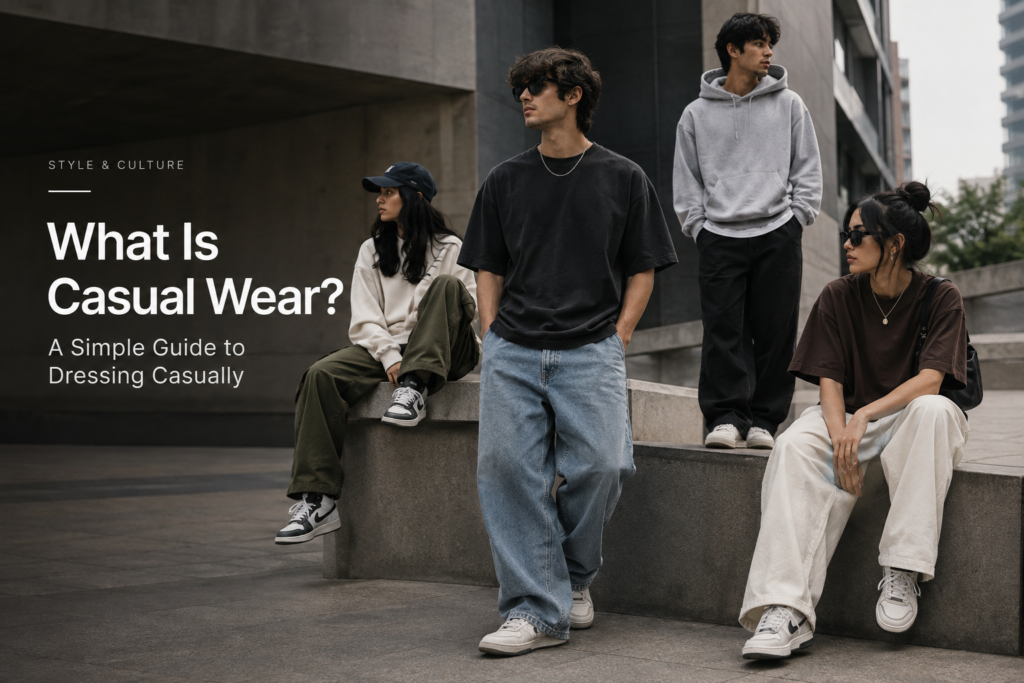
Casual wear is probably the most common type of clothing people wear, but it is also one of the easiest to get wrong.
You can put on a T-shirt, jeans, and sneakers and call it casual. But simply wearing comfortable clothes does not automatically mean you are dressed well.
Good casual style is about finding the balance between comfort, simplicity, fit, and personality. It should feel effortless without looking careless.
That is what makes casual wear so useful. You do not need a complicated wardrobe or a long list of fashion rules. You need a few reliable pieces, an understanding of how they work together, and enough confidence to wear them your own way.
So, what exactly is casual wear? And how do you dress casually without looking boring or underdressed?
Let’s break it down.
What Is Casual Wear?
Casual wear refers to clothing designed for everyday situations rather than formal or highly professional occasions.
It generally prioritizes comfort, practicality, freedom of movement, and personal style.
Think of clothes you might wear while:
- Meeting friends
- Going shopping
- Going to college
- Getting coffee
- Going to the movies
- Travelling
- Hanging out on the weekend
- Exploring a city
- Attending informal social events
Common casual clothing includes T-shirts, jeans, trousers, hoodies, sweatshirts, casual shirts, sneakers, jackets, and other relaxed pieces.
But casual does not mean careless.
There is a difference between looking relaxed and looking like you simply grabbed whatever was closest to your bed.
The best casual outfits look natural because the individual pieces work together.
Casual Wear Is About More Than Comfort
Comfort is an important part of casual clothing, but it should not be the only consideration.
A T-shirt can be comfortable and still look poorly fitted. A pair of sweatpants can be practical but may not work for every situation. A hoodie can look great with one outfit and completely out of place with another.
The goal is to combine comfort with intention.
A well-built casual outfit usually considers three things:
1. Fit
Fit determines how clothing sits on your body.
A basic T-shirt can look completely different depending on whether it is slim, regular, relaxed, or oversized.
2. Proportion
The relationship between different pieces matters.
For example, an oversized T-shirt paired with relaxed trousers creates a very different silhouette from an oversized T-shirt with extremely slim jeans.
3. Context
Casual does not mean that every casual item works everywhere.
A T-shirt and shorts might be perfect for a relaxed summer day but inappropriate for a business meeting.
Understanding the situation is part of dressing well.
Essential Pieces in a Casual Wardrobe
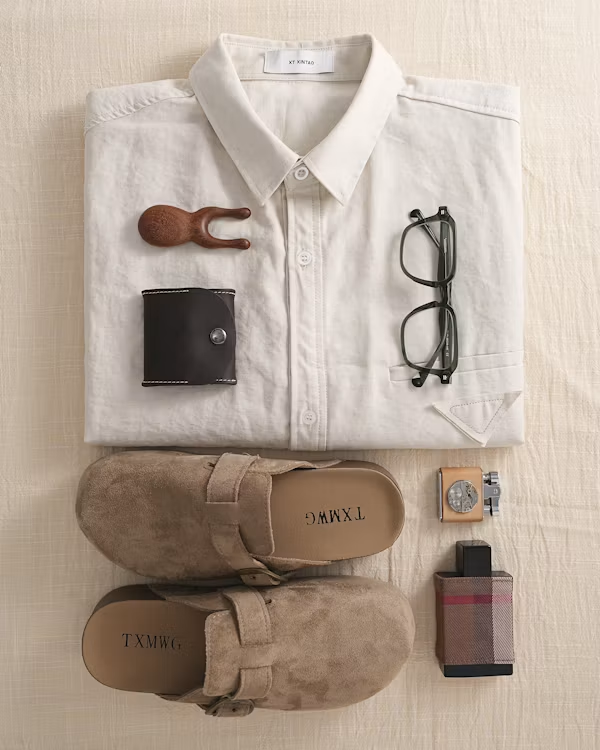
You do not need dozens of clothes to dress casually well.
A small collection of versatile pieces can create a surprisingly large number of outfits.
T-Shirts
T-shirts are arguably the foundation of modern casual dressing.
A good T-shirt can be worn on its own, underneath a shirt, beneath a jacket, or layered with a hoodie.
Start with versatile colors such as:
- Black
- White
- Grey
- Navy
- Earth tones
Once your basics are covered, you can introduce graphic designs, prints, textures, or stronger colors to give your wardrobe more personality.
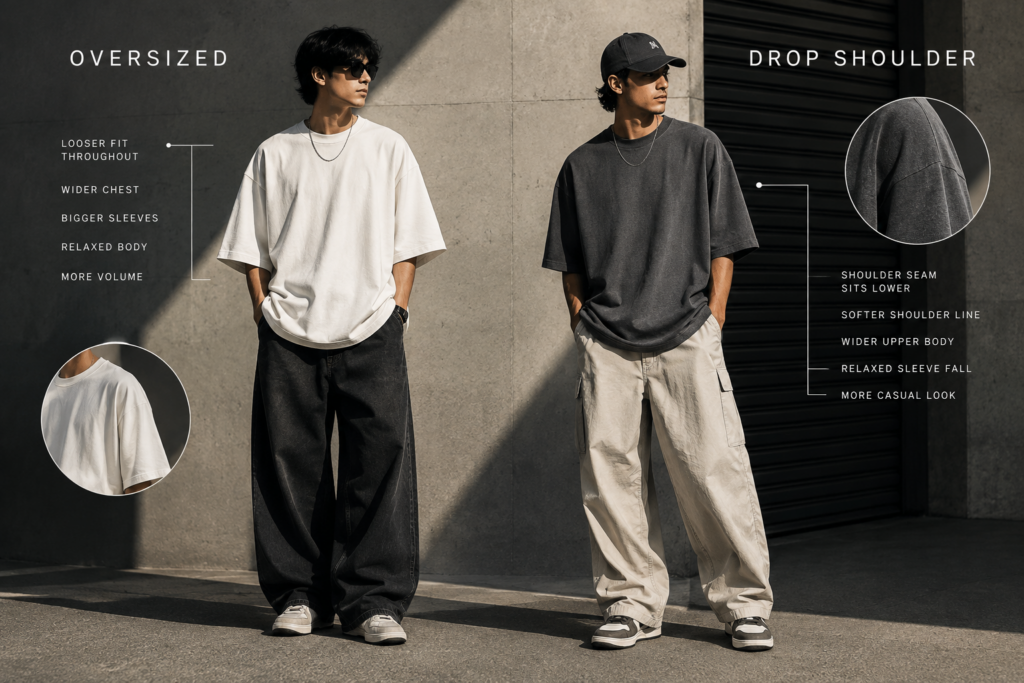
Fit matters just as much as color. A well-designed oversized T-shirt, for example, creates a completely different aesthetic from a fitted T-shirt.
Jeans
Jeans are one of the most versatile casual pieces.
Depending on the fit and wash, they can make an outfit feel classic, contemporary, rugged, or streetwear-inspired.
Popular options include:
- Straight-leg jeans
- Relaxed jeans
- Wide-leg jeans
- Slim jeans
- Tapered jeans
You do not need every style. Choose a fit that works with the rest of your wardrobe and feels natural on you.
Casual Trousers
Casual dressing does not stop at denim.
Cargo pants, chinos, relaxed trousers, and other casual pants can give you more variety.
They can also change the silhouette of an outfit without requiring you to completely change your style.
Hoodies and Sweatshirts
Hoodies and sweatshirts are especially useful for relaxed and streetwear-inspired outfits.
They work well with jeans, cargos, relaxed trousers, and sneakers.
A simple hoodie can create an understated outfit, while a graphic sweatshirt can become the main visual element.
Sneakers
Sneakers are one of the easiest ways to complete a casual outfit.
Clean, versatile sneakers can work with jeans, trousers, shorts, and T-shirts.
You do not necessarily need expensive sneakers. The important thing is choosing a pair that works with your wardrobe and keeping them in reasonable condition.
Casual Shirts and Overshirts
A casual shirt or overshirt is useful when you want your outfit to feel slightly more structured.
You can wear one buttoned up or leave it open over a T-shirt.
This simple layer can add depth to an otherwise basic outfit.
Casual vs. Smart Casual
One of the most common sources of confusion is the difference between casual wear and smart casual.
They overlap, but they are not exactly the same.
Casual wear generally focuses on relaxed, everyday clothing.
For example:
T-shirt + relaxed jeans + sneakers
Smart casual introduces slightly more polished elements.
For example:
Oxford shirt + chinos + clean sneakers
Or:
Knit polo + tailored trousers + minimal sneakers
Smart casual is useful for situations where you want to look put together without dressing formally.
The key difference is usually how refined the individual pieces and overall combination are.
How to Build a Simple Casual Outfit
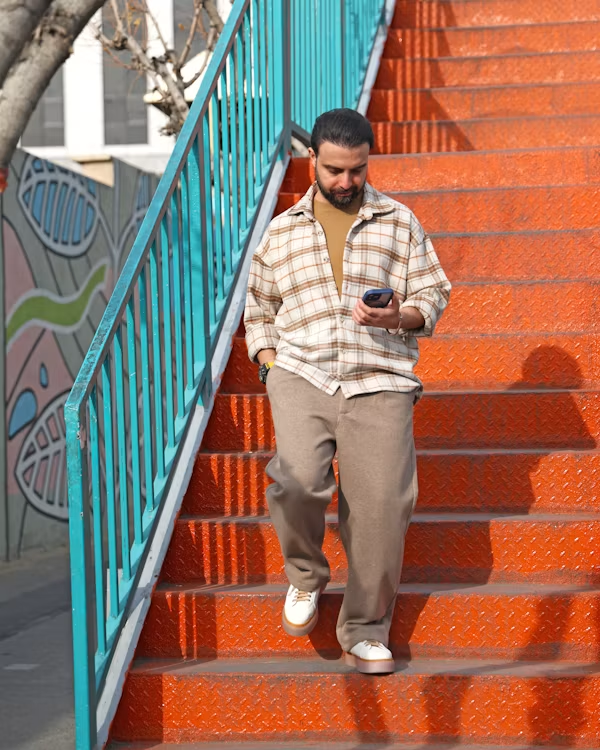
A good casual outfit does not need to be complicated.
Try starting with one simple foundation.
Step 1: Choose Your Main Piece
This could be a T-shirt, hoodie, overshirt, or jacket.
For example, start with a heavyweight black T-shirt.
Step 2: Choose a Bottom
Pair it with straight-leg jeans, relaxed trousers, or cargos.
Think about proportions rather than simply matching colors.
Step 3: Add Shoes
Choose sneakers that complement the overall outfit.
You do not need a statement shoe if the rest of your outfit already has strong visual elements.
Step 4: Add One Layer if Needed
An overshirt, jacket, or hoodie can add depth.
Layering is especially useful when the base outfit feels too simple.
Step 5: Keep Accessories Intentional
A watch, cap, chain, bag, or simple ring can finish an outfit.
But accessories should support the outfit rather than overwhelm it.
Why Fit Matters So Much in Casual Wear
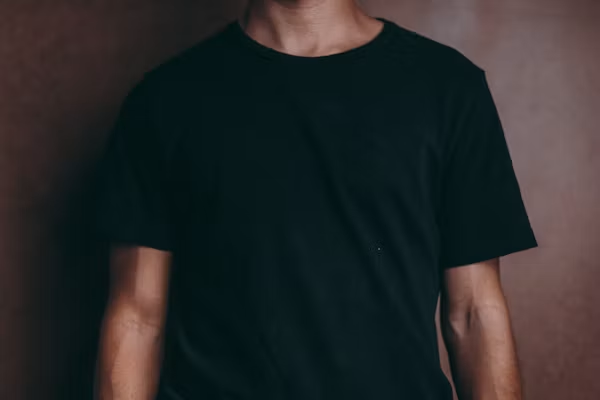
Because casual outfits often contain relatively simple pieces, fit becomes extremely important.
Imagine two people wearing the same black T-shirt and jeans.
One T-shirt fits awkwardly around the shoulders, the sleeves sit strangely, and the jeans bunch around the shoes.
The other has a clean shoulder line, appropriate sleeve length, and jeans that create a balanced silhouette.
The clothing itself is almost identical.
The difference is fit.
This is why understanding your preferred silhouette can improve your wardrobe more than simply buying more clothes.
Oversized Does Not Mean Wearing a Bigger Size
Oversized clothing has become a major part of contemporary casual and streetwear fashion.
But there is an important distinction between an intentionally oversized garment and simply buying clothing several sizes too large.
A properly designed oversized T-shirt considers:
- Shoulder placement
- Sleeve length
- Body width
- Garment length
- Fabric weight
- Overall proportions
The result should look intentional.
If you like oversized clothing, do not just size up automatically. Look for garments that are actually designed around an oversized silhouette.
Common Casual Wear Mistakes
Casual dressing may be simple, but there are still plenty of ways to get it wrong.
Wearing Clothes That Are Too Tight
Extremely tight clothing can make a casual outfit feel dated or uncomfortable, depending on the intended style.
The right fit depends on your body, preference, and overall outfit.
Going Too Oversized
The opposite problem exists too.
If every piece is extremely oversized, the outfit can lose structure.
Balance your proportions.
Ignoring Clothing Condition
Even a great outfit can look bad if the clothes are heavily wrinkled, stained, stretched, or visibly worn out.
Casual does not mean neglecting your clothes.
Wearing Too Many Trends at Once
You do not need every current trend in a single outfit.
If you combine oversized clothing, multiple bold graphics, statement sneakers, loud accessories, and several competing colors, the outfit can become visually chaotic.
Pick a direction and let the outfit breathe.
Confusing Expensive With Stylish
Price does not automatically equal good style.
A well-fitting affordable T-shirt can look better than an expensive garment worn without consideration.
Style comes from how you put things together, not simply how much they cost.
How to Make Casual Wear More Personal
This is where casual clothing becomes interesting.
There is no reason your everyday outfit needs to look like everyone else’s.
Personal style can come from:
- Your preferred silhouettes
- Your favorite colors
- Graphic T-shirts
- Specific sneakers
- Jewelry
- Vintage pieces
- Layering
- Unique accessories
- The brands you choose
- The way you combine different pieces
You might prefer clean monochrome outfits.
Someone else might prefer oversized graphic T-shirts and loose cargos.
Another person might build their wardrobe around vintage denim and classic sneakers.
None of these approaches is automatically better.
The point is to develop a visual language that feels like you.
Casual Wear and Streetwear
Casual wear and streetwear overlap heavily, but they are not identical.
Casual wear is a broad category of everyday clothing.
Streetwear is more closely connected to culture, music, art, sneakers, youth movements, and self-expression.
A simple T-shirt and jeans outfit can be casual.
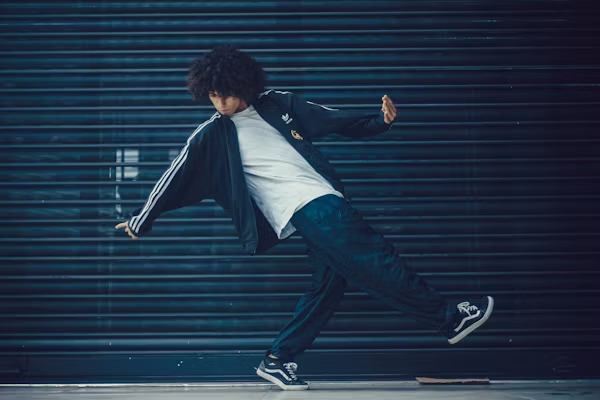
Add an oversized graphic T-shirt, relaxed cargos, statement sneakers, and intentional layering, and the same foundation can move toward a streetwear aesthetic.
This is why casual clothing can be such a strong starting point for personal style.
It gives you room to experiment.
What Should You Wear for Different Casual Situations?
There is no universal casual outfit because the right choice depends on the situation.
Everyday Outing
Try:
T-shirt + jeans + sneakers
Simple, comfortable, and difficult to overcomplicate.
Cooler Weather
Try:
T-shirt + overshirt/jacket + relaxed trousers + sneakers
The extra layer adds both warmth and visual depth.
Very Relaxed Day
Try:
Oversized T-shirt + relaxed pants + sneakers
Keep the silhouette intentional rather than simply wearing oversized pieces randomly.
Casual Evening
Try:
Well-fitted T-shirt + dark trousers/jeans + clean sneakers + lightweight jacket
A slightly cleaner combination can make a casual outfit feel more considered without becoming formal.
The Most Important Rule of Casual Dressing
There is no single formula that everyone needs to follow.
The best casual wardrobe is one that gives you options without forcing you to think too much every morning.
Build around pieces you genuinely enjoy wearing.
Find fits that work for you.
Understand your proportions.
Pay attention to the occasion.
Then add personality.
Because ultimately, casual style should not feel like a costume.
You should be able to put on an outfit and feel like yourself.
Final Thoughts
Casual wear is simple on the surface, but that simplicity is exactly what makes it powerful.
A T-shirt, a pair of jeans, and sneakers might sound basic. But the fit, proportions, fabric, colors, styling, and attitude behind those pieces can completely change the result.
You do not need an enormous wardrobe to dress well.
You need good foundations, intentional choices, and a style that feels authentic to you.
Fashion does not always need to be loud to make a statement.
Sometimes, the strongest outfit is simply one that looks like you chose it because you wanted to—not because everyone else was wearing it.
And that is where casual wear becomes more than just comfortable clothing.
It becomes personal style.