
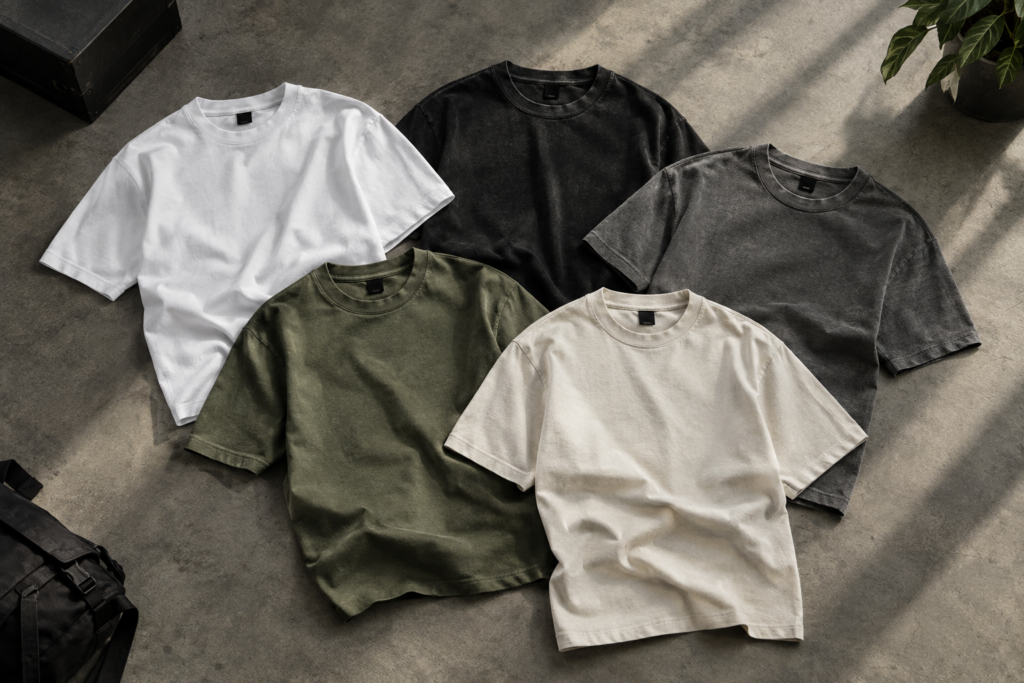
A good wardrobe does not need hundreds of T-shirts.
It needs the right ones.
Trends come and go. Fits change. Colors cycle in and out. But a few T-shirt styles continue to do the heavy lifting because they work with almost everything else you already own.
The problem is that “basic” does not automatically mean “good.” A poorly cut T-shirt can make an outfit look unfinished, while a well-made one can become the foundation for dozens of different looks.
For a modern wardrobe, especially one built around casual and streetwear dressing, the goal is not to collect every T-shirt you like. It is to build a small rotation where every piece has a purpose.
From the classic white tee to the oversized streetwear staple, here are the essential T-shirts worth having in your wardrobe.
Why T-Shirts Matter So Much
The T-shirt is one of the most flexible items in a casual wardrobe.
You can wear one with jeans and sneakers for an everyday outfit, layer it underneath a jacket, pair it with trousers for a cleaner look, or build an entire streetwear outfit around its silhouette.
That versatility makes choosing the right T-shirts more important than simply buying more of them.
A useful T-shirt wardrobe should cover three things:
- Everyday basics
- Different silhouettes
- A few colors that actually work with your clothes
You do not need ten versions of the same black T-shirt.
You need a collection that gives you options.
1. The Classic White T-Shirt
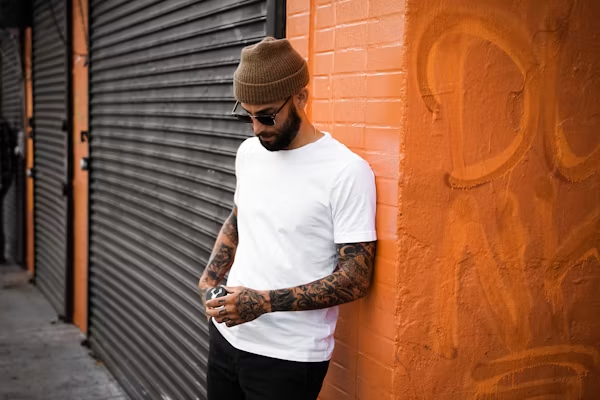
If there is one T-shirt every wardrobe should have, it is the white crew neck.
It is simple for a reason.
A clean white T-shirt can work with denim, cargos, shorts, trousers, jackets, overshirts and almost any color you put next to it.
Wear it with blue jeans and sneakers and you have an easy everyday outfit.
Throw a black jacket over it and the same T-shirt immediately feels sharper.
Pair it with relaxed trousers and minimalist sneakers and you have a more refined casual look.
What to Look For in a White T-Shirt
A good white T-shirt should have:
- A clean neckline
- Fabric that is not overly transparent
- A shape that holds after washing
- A comfortable shoulder fit
- Enough structure to avoid looking flimsy
The fit matters just as much as the color.
A slim white tee creates a completely different look from a relaxed or oversized white tee.
Best for: Everyday wear, layering, minimal outfits and travel.
2. The Black T-Shirt
If white is the universal neutral, black is its more confident counterpart.
A black T-shirt immediately gives an outfit a sharper and more understated feel.
It works particularly well with streetwear because it provides a strong base for larger silhouettes, graphic pieces, accessories and contrasting colors.
Try a black tee with:
- Black cargos
- Faded denim
- Beige trousers
- Olive pants
- Overshirts
- Bomber jackets
- Sneakers
The beauty of black is that you rarely have to think too hard about it.
It simply works.
However, pay attention to fabric quality. Cheap black cotton can fade quickly, making the T-shirt look worn in a way you probably did not intend.
Best for: Streetwear, evening outfits, monochrome looks and layering.
3. The Grey T-Shirt
Grey is often overlooked because it is not as immediately striking as black or white.
That is exactly why it is useful.
A grey T-shirt sits comfortably between the two.
It adds a little more visual depth than white while remaining easier to style than many stronger colors.
Light grey works particularly well with:
- Blue denim
- Black pants
- White sneakers
- Navy
- Olive
- Beige
Charcoal grey can take things in a darker, more sophisticated direction.
If your wardrobe already contains a lot of black and white, adding grey is one of the easiest ways to introduce variation without making your outfits complicated.
Best for: Everyday outfits, tonal styling and relaxed casual looks.
4. The Oversized T-Shirt

This is where the basic T-shirt moves into streetwear territory.
But there is an important distinction:
Oversized does not mean buying a T-shirt three sizes too large.
A properly designed oversized T-shirt is cut intentionally. The shoulders, sleeves, body width and length are designed to create a relaxed silhouette.
A good oversized tee should feel relaxed without looking accidental.
Try pairing it with:
- Straight-leg denim
- Wide-leg trousers
- Cargos
- Shorts
- Layered jackets
- Minimal sneakers
The biggest mistake is combining oversized proportions everywhere.
If your T-shirt is very loose, balance it with another part of the outfit rather than simply making everything enormous.
Best for: Streetwear, relaxed outfits and modern casual styling.
5. The Regular-Fit T-Shirt
Not everyone wants oversized clothing.
And not every outfit needs it.
A regular-fit T-shirt provides a cleaner silhouette and is arguably one of the most versatile pieces you can own.
The important thing is that “regular fit” should not mean extremely tight.
Look for a T-shirt that follows your body without clinging to it.
It should give you enough room to move while maintaining a clean shape.
This style works especially well with:
- Straight jeans
- Chinos
- Tailored trousers
- Shorts
- Lightweight jackets
- Overshirts
If you are building your wardrobe from scratch, a good regular-fit T-shirt is an excellent starting point.
Best for: Everyday wear, smart-casual outfits and people who prefer a cleaner silhouette.
6. The Graphic T-Shirt
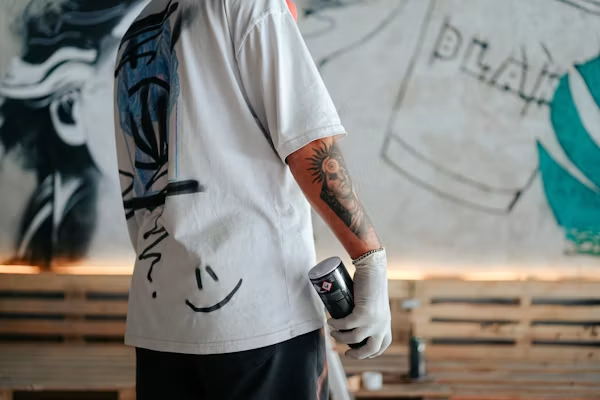
Not every T-shirt in your wardrobe needs to be plain.
In fact, a good graphic T-shirt can become one of the pieces that actually expresses your personality.
This is where you can experiment with:
- Artwork
- Typography
- Photography
- Illustrations
- Cultural references
- Abstract graphics
- Brand graphics
The key word is good.
A graphic T-shirt should feel intentional.
Avoid filling your wardrobe with random graphics simply because they look interesting individually. Think about whether the design actually fits your overall style.
One strong graphic tee is more useful than five forgettable ones.
For a streetwear wardrobe, this is also where you can introduce more personality without changing the rest of your outfit.
Best for: Self-expression, streetwear and statement outfits.
7. The Earth-Tone T-Shirt
Once you have your core black, white and grey tees covered, it is worth adding one or two earthy colors.
Think:
- Olive
- Beige
- Brown
- Stone
- Sand
- Muted green
These colors are extremely easy to combine and can make a wardrobe feel more considered without becoming colorful for the sake of being colorful.
Olive, for example, works naturally with black, cream, white and denim.
Beige works particularly well with darker bottoms.
Brown can add warmth to an otherwise neutral outfit.
The trick is to choose muted shades rather than overly bright versions if versatility is your priority.
Best for: Everyday outfits, neutral wardrobes and adding subtle color.
8. The Statement T-Shirt
A statement T-shirt is different from a graphic T-shirt.
A graphic tee may simply contain an interesting visual.
A statement tee is designed to be the focus of the outfit.
That could mean:
- A bold graphic
- An unusual silhouette
- A distinctive print
- Experimental proportions
- A strong color
- An unexpected design detail
You do not need many of these.
In fact, having too many statement pieces defeats the purpose.
The ideal wardrobe might have several dependable basics and only a few T-shirts that demand attention.
That creates contrast.
When everything is trying to stand out, nothing actually does.
How Many T-Shirts Do You Actually Need?
There is no magic number.
But if you are trying to build a practical wardrobe rather than a massive collection, 8–12 well-chosen T-shirts can cover a huge amount of everyday dressing.
A starting rotation could look something like this:
| T-Shirt | Quantity |
|---|---|
| White | 2 |
| Black | 2 |
| Grey | 1 |
| Oversized neutral | 2 |
| Earth tone | 1–2 |
| Graphic | 1–2 |
| Statement | 1 |
You can adjust this depending on how often you wear T-shirts and how frequently you do laundry.
The point is not to follow this list religiously.
The point is to understand the principle:
Build around versatility first, personality second.
Choosing the Right T-Shirt Is About More Than Color
Two T-shirts can look almost identical on a product page and feel completely different when you wear them.
That is because several factors affect how a T-shirt actually looks.
Fabric
Cotton remains a popular choice because it is comfortable, breathable and versatile.
But “100% cotton” alone does not tell you everything.
The weave, finishing, construction and fabric weight all affect how the garment feels and drapes.
GSM
GSM refers to the weight of the fabric.
Generally, a heavier T-shirt will have more structure, while a lighter one may feel more breathable and relaxed.
But heavier does not automatically mean better.
The right weight depends on the intended use, climate and silhouette.
Fit
A great fabric cannot rescue a bad fit.
Pay attention to:
- Shoulder placement
- Sleeve length
- Body width
- T-shirt length
- Neck opening
- Overall silhouette
A T-shirt should look intentional on your body.
Construction
Look at details such as:
- Collar ribbing
- Stitching
- Seams
- Hem finishing
- Fabric consistency
These small details are often what separate a T-shirt that lasts from one that starts looking tired after a few washes.
How to Build Outfits Around Your T-Shirts
The easiest way to get more value from your wardrobe is to stop thinking about individual T-shirts and start thinking about combinations.
White Tee + Blue Denim
The classic.
Simple, clean and almost impossible to make complicated.
Black Tee + Cargos
A natural streetwear combination.
Keep the sneakers relatively clean and let the proportions do the work.
Oversized Tee + Straight Trousers
This creates a more contemporary silhouette without going completely oversized.
Grey Tee + Black Pants
Minimal without being boring.
Add a jacket or overshirt if you want more structure.
Graphic Tee + Simple Bottoms
Let the T-shirt do the talking.
The rest of the outfit should support it rather than compete with it.
The Biggest Mistake: Buying Too Many Similar T-Shirts
This is where most people get their wardrobe wrong.
You see a T-shirt you like.
You buy it.
Then another one that looks almost identical.
Then another.
Eventually you have fifteen T-shirts but only three combinations you actually wear.
Instead, ask yourself before buying:
What does this T-shirt add to my wardrobe?
Does it give you:
- A new color?
- A different silhouette?
- A new styling option?
- A stronger statement?
- Better quality?
- A piece that works for a specific situation?
If the answer is no, you probably do not need it.
A smaller wardrobe with stronger pieces will almost always be easier to style.
Build a T-Shirt Wardrobe That Actually Feels Like You
There is no universal list of T-shirts that everyone must own.
Your wardrobe should reflect your lifestyle.
Someone who lives in oversized streetwear will need a different rotation from someone who prefers fitted minimal outfits.
Someone who wears neutral colors every day may need only a few shades.
Someone who treats clothing as a form of self-expression might want more graphic and statement pieces.
The essentials are simply the foundation.
From there, your personality takes over.
And that is ultimately what makes a wardrobe interesting.
Basics give you flexibility. Statement pieces give you identity.
The goal is not to own the most T-shirts.
It is to own the T-shirts you actually want to wear.
Final Thoughts
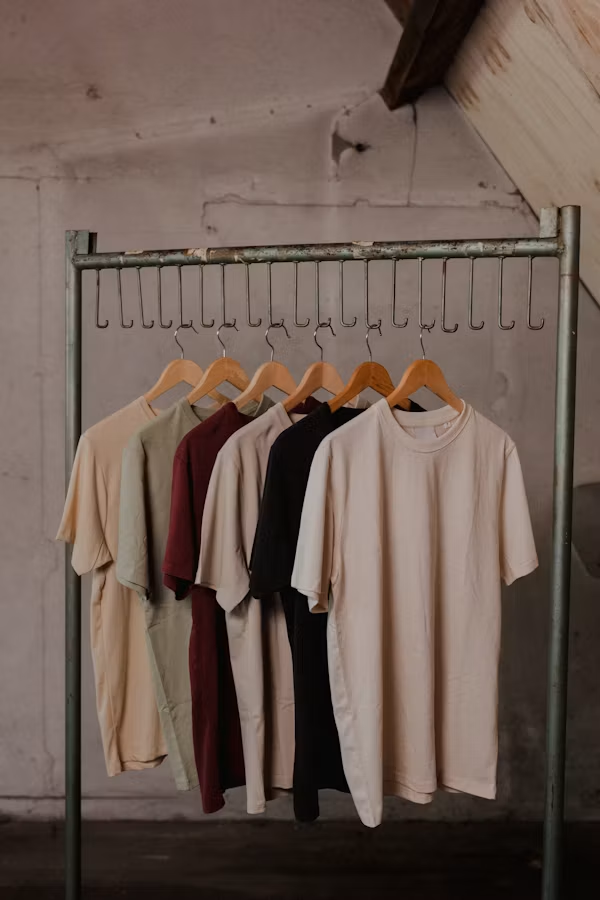
A great T-shirt wardrobe is built on versatility, fit and intention.
Start with the essentials: white, black and grey.
Then add an oversized silhouette, a few earth tones and one or two graphic or statement pieces that actually feel like you.
Pay attention to fabric, construction and fit instead of relying only on color or branding.
Because a T-shirt might look simple, but the right one can become the foundation of an entire outfit.
And when you find those pieces, you stop asking:
“What should I wear?”
You already know.