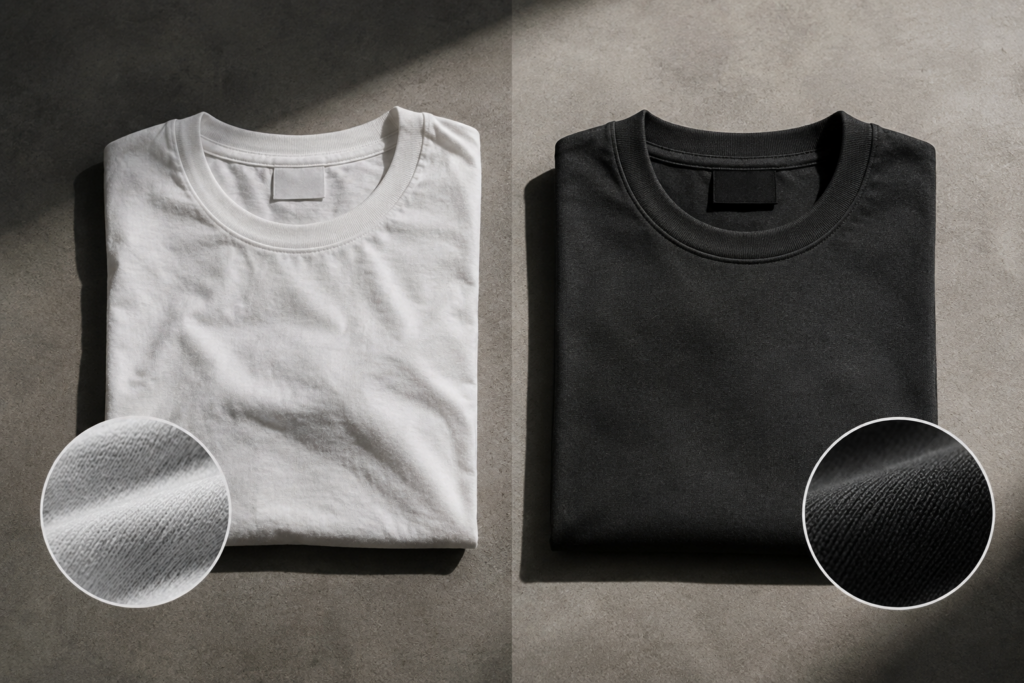
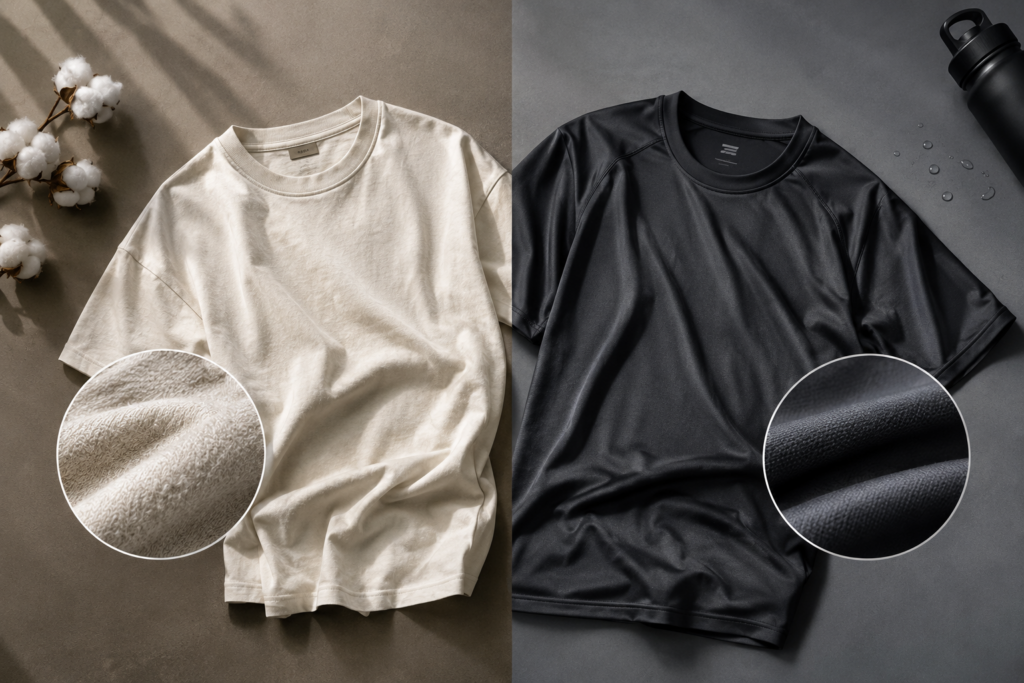
When buying a T-shirt, most people focus on the design, color, size, and fit. But there is another factor that can make a huge difference in how a T-shirt feels and performs: the fabric.
Cotton and polyester are two of the most commonly used materials in T-shirts, but they behave very differently. Cotton is known for its softness, natural feel, and breathability, while polyester is valued for durability, quick drying, and performance.
So, which one is actually better for T-shirts?
The answer isn’t as simple as choosing one over the other. Cotton and polyester are designed for different purposes, and the right choice depends on how you plan to wear your T-shirt.
Let’s look at the differences.
What Is Cotton?
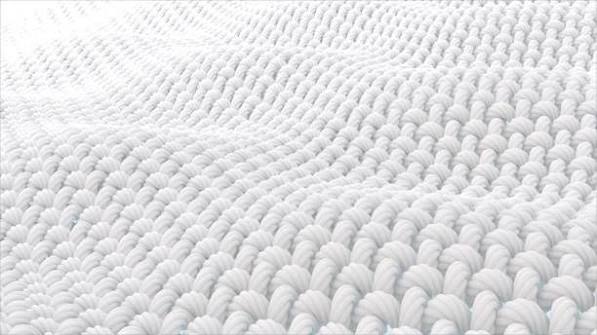
Cotton is a natural fiber obtained from the cotton plant. It has been used in clothing for centuries and remains one of the most popular materials for everyday apparel.
Cotton T-shirts are popular because they generally feel soft, comfortable, and breathable against the skin. The natural fibers also give cotton its familiar texture and relaxed appearance.
However, not all cotton T-shirts are the same.
The quality of cotton can vary depending on the type of cotton, yarn, fabric construction, and manufacturing process. Terms such as combed cotton, ring-spun cotton, and long-staple cotton can indicate different characteristics in the finished garment.
This means that simply seeing “100% cotton” on a label doesn’t automatically tell you whether the T-shirt will be thick, soft, durable, or premium.
What Is Polyester?
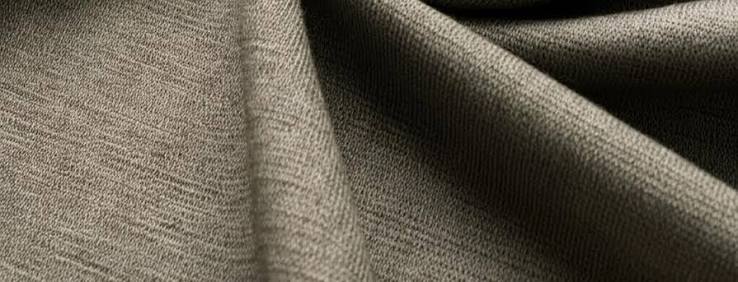
Polyester is a synthetic fiber commonly used in modern clothing. Unlike cotton, it isn’t derived from a plant.
One of polyester’s biggest advantages is its ability to provide performance-oriented properties. It is lightweight, durable, resistant to shrinking, and generally dries faster than cotton.
Polyester is especially common in sportswear and activewear because it can be engineered to manage moisture and help sweat evaporate more quickly.
This makes polyester useful for activities such as running, workouts, sports, and other situations where you’re likely to sweat heavily.
Modern polyester fabrics can also be designed with different textures, weights, and finishes, so polyester doesn’t always have the shiny or stiff appearance people may associate with older synthetic clothing.
Cotton vs Polyester: The Main Differences
The easiest way to understand the difference is to compare their main characteristics.
| Feature | Cotton | Polyester |
|---|---|---|
| Feel | Soft and natural | Smooth and synthetic |
| Breathability | Generally very good | Depends on construction |
| Moisture absorption | High | Low |
| Drying speed | Slower | Faster |
| Durability | Good | Very good |
| Shrinkage | Can shrink | Usually minimal |
| Shape retention | Can change over time | Generally excellent |
| Wrinkle resistance | Moderate | High |
| Everyday comfort | Excellent | Good to excellent |
| Sports/performance | Moderate | Excellent |
| Fiber type | Natural | Synthetic |
Neither fabric wins every category.
The better option depends on what you expect from your T-shirt.
Comfort: Cotton Has the Advantage
For everyday comfort, cotton is difficult to beat.
Cotton has a soft, natural feel that many people prefer when wearing a T-shirt for several hours. A good-quality cotton T-shirt can feel comfortable without giving you the synthetic sensation that some polyester fabrics can have.
This makes cotton particularly suitable for everyday activities such as going to college, meeting friends, travelling, relaxing at home, or putting together a casual outfit.
That said, modern polyester fabrics can also be extremely comfortable. The quality and construction of the fabric matter.
A lightweight, well-designed polyester T-shirt can feel very comfortable, particularly when you’re active.
For a traditional everyday T-shirt experience, however, cotton usually has the edge.
Breathability: It Depends on the Fabric
Cotton is naturally breathable, which is one reason it works so well for casual clothing.
However, it would be inaccurate to say that cotton is always more breathable than polyester.
Polyester fabrics can be specifically engineered to improve airflow and moisture management. A lightweight performance polyester T-shirt may actually feel more comfortable than a heavy cotton T-shirt during physical activity.
The fabric’s construction, thickness, knit, and finishing can all affect how breathable a T-shirt feels.
For relaxed everyday wear, cotton is often an excellent choice.
For active use, performance polyester can have an advantage.
Moisture Management: Polyester Wins

This is one area where polyester has a clear advantage.
Cotton absorbs moisture. While that can initially feel comfortable, it can become a problem when you’re sweating heavily.
Once cotton becomes wet, it can hold onto that moisture for longer and may take considerable time to dry. A soaked cotton T-shirt can also become heavier and feel uncomfortable.
Polyester absorbs much less moisture and can be engineered to move sweat across the surface of the fabric, allowing it to evaporate more quickly.
That’s why polyester is so common in sports and performance clothing.
If you’re choosing a T-shirt for running, training, football, gym sessions, or other high-intensity activities, polyester is usually the more practical option.
Durability: Polyester Has the Edge
Durability is another important factor when choosing a T-shirt.
Polyester is generally very resistant to stretching, shrinking, and losing its shape. It can handle repeated washing and wearing while maintaining its original structure.
Cotton can also be highly durable, especially when high-quality fibers and good garment construction are used. However, cotton may gradually change in shape or shrink depending on the manufacturing process and how the garment is washed.
This doesn’t mean that cotton T-shirts are fragile.
A well-made cotton T-shirt can last for years.
The bigger lesson is that fiber type isn’t the only factor that determines durability. Fabric quality, stitching, construction, and finishing all matter.
Shrinkage: Polyester Is More Stable
If you’ve ever washed a T-shirt and noticed that it no longer fits the same way, you’ve experienced one of the common characteristics of cotton.
Cotton can shrink when exposed to heat and moisture. The amount of shrinkage depends on the fabric and whether the garment has been pre-shrunk during manufacturing.
Polyester generally has much better dimensional stability and is less likely to shrink significantly under normal washing conditions.
If maintaining the original size and shape of a T-shirt is particularly important to you, polyester has an advantage.
However, following the care instructions on the garment can significantly reduce problems with either fabric.
Which Fabric Looks Better?
There isn’t a universal answer to this question.
Cotton often has a more natural appearance and texture, which makes it especially popular in casual fashion and streetwear.
For example, heavyweight cotton can give an oversized T-shirt a structured silhouette and substantial feel. This is one reason heavier cotton fabrics are commonly associated with modern streetwear.
Polyester can have a smoother, more technical appearance, making it particularly suitable for sportswear and performance clothing.
But appearance depends on much more than fiber type.
The fabric weight, weave or knit, finish, color, fit, and overall construction all influence how the T-shirt looks.
Cotton vs Polyester for Streetwear

If you’re buying a T-shirt mainly as a fashion piece, the decision becomes slightly different.
Streetwear isn’t just about performance.
Fit, silhouette, fabric weight, texture, graphics, and construction all contribute to the final look.
A heavyweight cotton T-shirt can create a structured, oversized silhouette that looks completely different from a lightweight polyester performance shirt.
This doesn’t mean polyester has no place in fashion. Modern designers use synthetic fabrics for technical, lightweight, and experimental garments.
But for classic everyday streetwear, cotton remains a particularly strong option.
When choosing a streetwear T-shirt, don’t focus only on whether the label says cotton or polyester.
Pay attention to how the fabric behaves on the body.
Which Fabric Is Better for Hot Weather?
This question is more complicated than it initially appears.
Cotton is often considered a good choice for hot weather because it is breathable and comfortable.
For casual activities, a lightweight cotton T-shirt can work extremely well during warm days.
However, if you’re sweating heavily, cotton’s ability to absorb moisture can become a disadvantage. Once saturated, it can stay wet for longer.
A lightweight performance polyester T-shirt can be more suitable for exercise or physically demanding activities because it can dry more quickly.
So the better choice depends on what you’re doing.
Hot and casual? Cotton can be excellent.
Hot and highly active? Polyester may perform better.
What About Cotton-Polyester Blends?
You don’t always have to choose between 100% cotton and 100% polyester.
Cotton-polyester blends combine both fibers in a single fabric.
The goal is often to balance some of cotton’s comfort characteristics with polyester’s durability and performance properties.
Depending on the blend ratio and fabric construction, a blended T-shirt may offer:
- Softness
- Better shape retention
- Improved durability
- Faster drying
- Reduced shrinkage
- A different texture and drape
Blends can be useful when you want a balance between comfort and performance.
However, a blend isn’t automatically better than either pure cotton or polyester.
The right blend depends on what the manufacturer is trying to achieve.
The Fabric Isn’t Everything
Here’s something that is often overlooked when comparing T-shirts.
The fiber alone doesn’t determine whether a T-shirt is good.
Two T-shirts can both be made from 100% cotton and feel completely different.
Why?
Because other factors matter too:
- Fabric weight
- Yarn quality
- Knit construction
- Finishing
- Stitching
- Pattern
- Fit
- Garment construction
- Dyeing process
- Manufacturing quality
A lightweight, poorly constructed cotton T-shirt and a heavyweight, well-made cotton T-shirt may have completely different levels of quality.
The same applies to polyester.
Seeing “100% polyester” on a label doesn’t automatically mean you’re looking at a high-performance garment.
The best T-shirt is the result of good fabric combined with good construction and a purpose-driven design.
Which One Should You Choose?
The easiest way to decide is to think about how you will use the T-shirt.
Choose Cotton If You Want:
- A natural feel
- Everyday comfort
- Casual styling
- Breathability
- A classic T-shirt experience
- Streetwear and lifestyle wear
Choose Polyester If You Want:
- Quick drying
- Moisture management
- High durability
- Shape retention
- Sportswear
- Gym or performance use
Choose a Blend If You Want:
- A balance between comfort and performance
- Improved durability
- Reduced shrinkage
- Faster drying
- A different combination of texture and functionality
So, Which Fabric Is Better for T-Shirts?
There isn’t one universal winner.
Cotton is generally better suited to everyday lifestyle and fashion-focused T-shirts, while polyester is usually better for performance, sports, and situations where quick drying and moisture management matter.
For streetwear and casual fashion, cotton remains a popular choice because of its comfort, natural feel, and ability to work with different weights and silhouettes.
But choosing a T-shirt shouldn’t come down to one question about fiber composition.
Look at the complete garment.
Consider the fabric, weight, fit, construction, quality, and purpose.
A great T-shirt is one where all of these elements work together.

Final Thoughts
Cotton and polyester aren’t fabrics where one needs to completely replace the other.
They simply solve different problems.
Cotton provides the softness, comfort, and natural feel that make it ideal for many everyday T-shirts. Polyester offers durability, quick drying, and performance characteristics that make it particularly useful for sports and activewear.
Blended fabrics provide another option for people who want a balance between different properties.
So before buying your next T-shirt, don’t simply ask:
“Cotton or polyester?”
Ask what you actually want from the garment.
Are you looking for something to wear every day?
Are you buying something for workouts?
Are you building a streetwear outfit?
Once you know the purpose, choosing the right fabric becomes much easier.
Because ultimately, the best fabric isn’t the one that’s universally better. It’s the one that’s right for the way you live, move, and wear it.