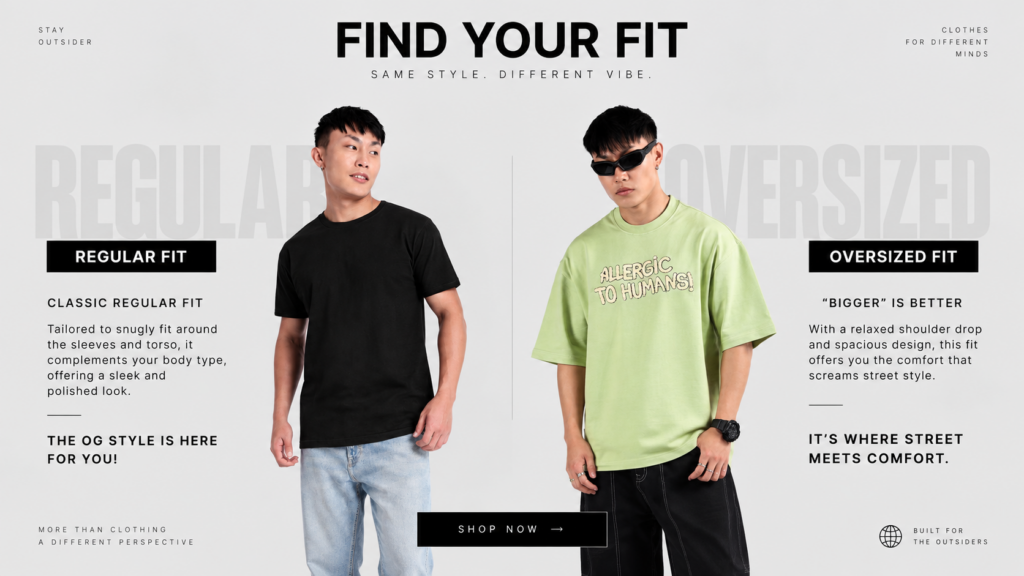
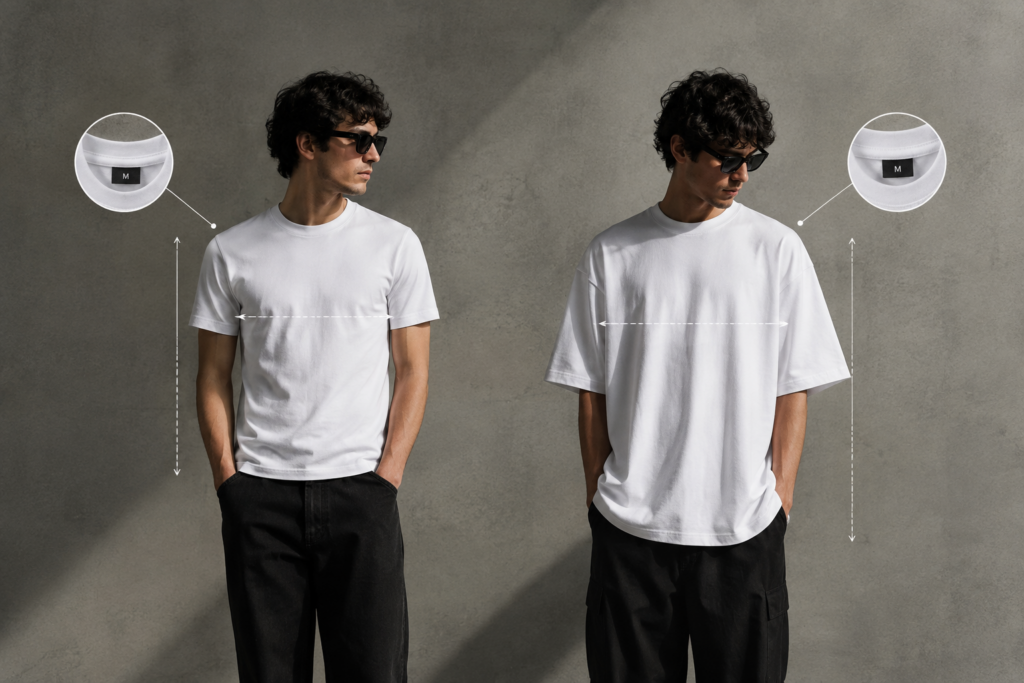
Have you ever worn a Medium from one brand and felt like it fits perfectly, only to buy another Medium somewhere else and discover that it feels either too tight, too loose, too short, or simply… wrong?
You’re not imagining it.
A Medium is not necessarily a Medium everywhere.
This is one of the most confusing parts of buying clothes, especially when shopping online. We naturally assume that clothing sizes work like shoe sizes or measurements on a ruler: if two T-shirts are both labeled “M,” they should be roughly the same size.
But clothing doesn’t work that way.
The letter printed on a T-shirt — S, M, L, XL, and so on — is essentially a size label, not a universal physical measurement. Different brands can use different patterns, proportions, fabrics, fits, and sizing systems. That means two T-shirts carrying the exact same size label can look and feel completely different when worn.
Understanding why this happens can make shopping much easier and help you choose T-shirts based on what actually matters: measurements and fit, not just the letter on the tag.
Size and Fit Are Not the Same Thing
Before getting into the reasons behind inconsistent sizing, it’s important to understand one simple distinction:
Size is a label. Fit is the result.
A T-shirt labeled Medium might technically be your size, but that doesn’t automatically mean it will give you the silhouette you want.
One Medium might have:
- A wider chest
- Longer sleeves
- A longer body
- Broader shoulders
- A relaxed silhouette
Another Medium might have:
- A narrower chest
- Shorter sleeves
- A shorter body
- Narrower shoulders
- A closer-to-body fit
Both can legitimately be called Medium.
This is because brands develop their clothing around their own patterns and fit philosophies. There is no single universal garment measurement that every brand must use for a Medium.
So when someone says, “This brand runs small,” what they often really mean is:
“This brand’s measurements and proportions are different from what I’m used to.”
1. Every Brand Uses Different Fit Blocks
One of the biggest reasons sizing varies is something called a fit block.
A fit block is essentially the base pattern used to develop garments. Brands use a particular body shape and set of proportions as a starting point, then develop different sizes from that foundation.
Imagine two brands creating a Medium T-shirt.
Brand A might design its Medium around a relatively slim silhouette.
Brand B might design its Medium around a broader, more relaxed silhouette.
Even if both labels say “M,” the finished garments can have noticeably different chest, shoulder, sleeve, and length measurements.
The difference isn’t necessarily a manufacturing mistake.
The brands may simply be trying to achieve different silhouettes.
This is especially noticeable when comparing:
- Streetwear brands
- Athletic brands
- Luxury fashion
- Basics brands
- Slim-fit brands
- Oversized brands
Each category can have a completely different interpretation of what a particular size should look like.
2. Different Brands Have Different Ideas of “Fit”
The word “fit” itself can be misleading.
A brand might consider a T-shirt to fit correctly when it sits close to the body.
Another brand might intentionally leave several extra inches of room around the chest.
Both brands can call their product a Medium.
This is why you shouldn’t choose a T-shirt based solely on the size label without considering the fit type.
For example:
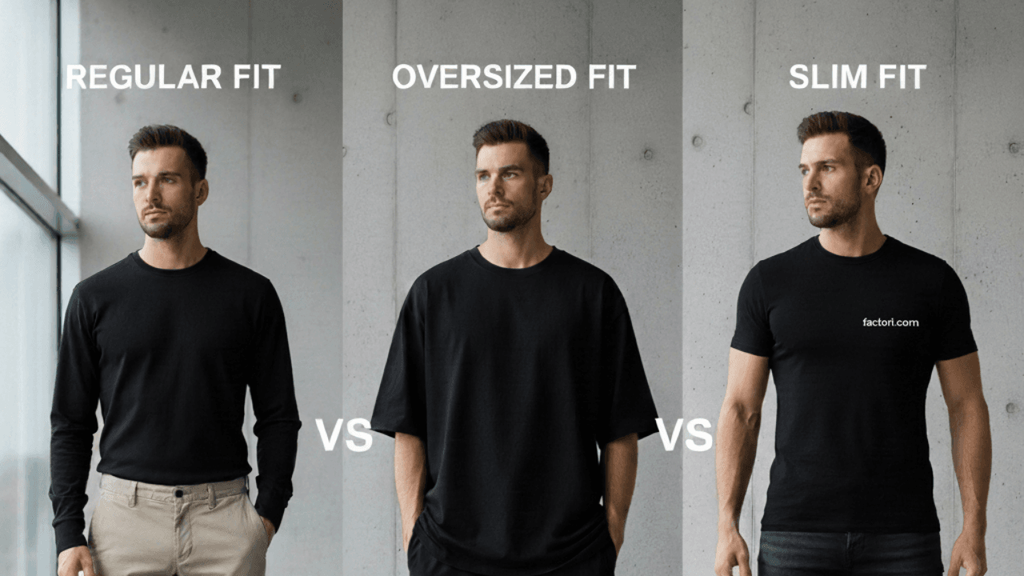
Slim Fit
Designed to sit closer to the body.
Usually features:
- Narrower chest
- More fitted waist
- Closer sleeves
- Less overall ease
Regular Fit
A more traditional silhouette.
Usually offers:
- Moderate room through the chest
- Balanced shoulder proportions
- Comfortable body width
- Standard length
Relaxed Fit
Designed with additional room.
Usually features:
- Wider chest
- More room through the arms
- Slightly dropped shoulders
- More comfortable silhouette
Oversized Fit
Designed intentionally larger than a conventional fit.
It may feature:
- Wider body
- Dropped shoulders
- Longer or deliberately proportioned sleeves
- Increased overall volume
Therefore, an oversized Medium isn’t necessarily “too big.”
It may simply be doing exactly what the design intended.
3. Garment Measurements Matter More Than the Letter
This is probably the most useful lesson when shopping for T-shirts online:
Stop asking only, “What size am I?”
Start asking:
“What measurements fit me?”
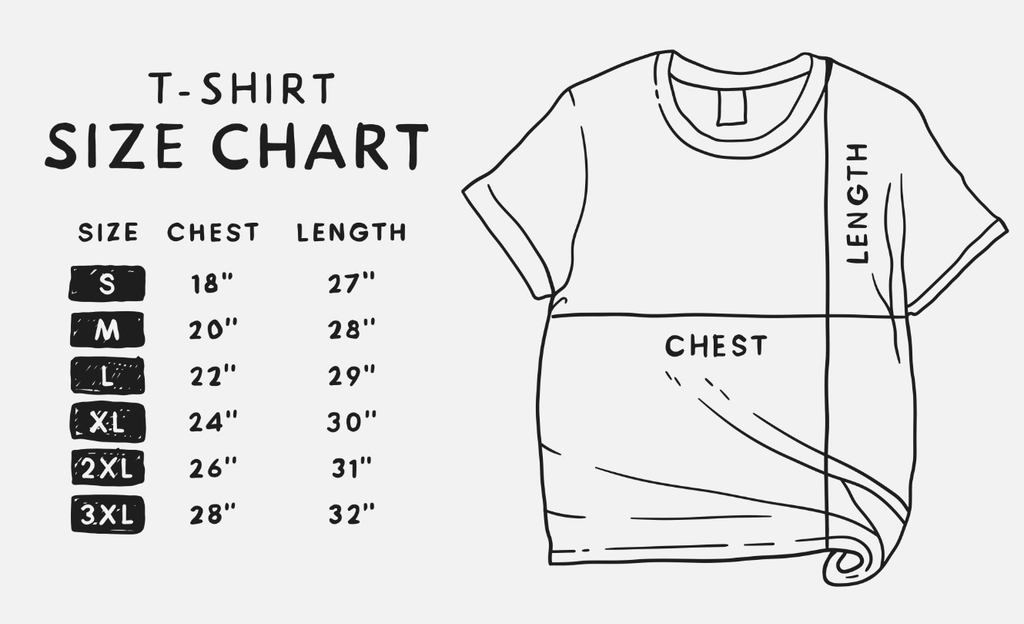
For T-shirts, some of the most useful measurements are:
- Chest width
- Shoulder width
- Body length
- Sleeve length
- Sleeve opening
When measuring a T-shirt you already own, lay it flat without stretching the fabric. Chest width is commonly measured from one armpit across to the other, while body length can be measured from the shoulder area down to the hem.
For example, imagine your favorite T-shirt measures:
Chest width: 22 inches
Length: 29 inches
Shoulder: 19 inches
Instead of simply searching for another “Large,” you can compare those measurements with the new brand’s size chart.
That gives you a much better idea of how the new T-shirt will actually fit.
The label becomes secondary.
4. Your Favorite T-Shirt Is Your Best Reference
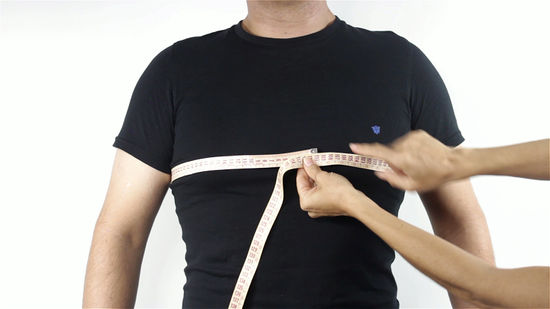
If you’re buying clothes online and constantly getting the wrong fit, here’s a simple trick:
Find the T-shirt you already own that fits you perfectly.
Don’t guess its size.
Measure it.
This gives you a physical reference point.
You can then compare the measurements of that T-shirt against the measurements provided by another brand.
This method is particularly useful because your preferred fit isn’t necessarily the same as someone else’s.
You might like:
- A wider chest
- Shorter body length
- Longer sleeves
- Dropped shoulders
- A boxier silhouette
Another person with the exact same body measurements might prefer the opposite.
Your ideal T-shirt is therefore not determined entirely by your body.
It’s also determined by how you want the garment to sit on your body.
5. Fabric Can Change How the Same Size Feels
Measurements aren’t the whole story.
Fabric also affects fit.
Two T-shirts can have similar measurements but feel completely different because their fabrics behave differently.
For example, a lightweight fabric may drape closer to the body.
A heavier cotton fabric may hold a more structured shape.
Stretch fabric can feel more forgiving.
A rigid fabric may feel tighter even when the measurements look similar.
Fabric composition, weight, construction, and finishing can all influence how a garment behaves when worn.
This is one reason simply comparing one number isn’t enough.
A T-shirt isn’t a flat rectangle.
It’s a garment designed to move around a three-dimensional body.
6. Body Proportions Also Matter
Here’s another reason two people can wear the same size but experience completely different fits.
People have different proportions.
Two people might have the same chest measurement but different:
- Shoulder widths
- Arm lengths
- Torso lengths
- Body shapes
- Shoulder slopes
Imagine two people who both have a 40-inch chest.
Person A might have broad shoulders and a shorter torso.
Person B might have narrower shoulders and a longer torso.
The same T-shirt can sit differently on both bodies.
This is why the phrase “true to size” isn’t always particularly useful.
True to whose size?
A customer may describe a T-shirt as true to size because it fits their body exactly as expected.
Another customer may buy the same size and think it runs large.
Both experiences can be genuine.
7. Oversized T-Shirts Make This Even More Confusing
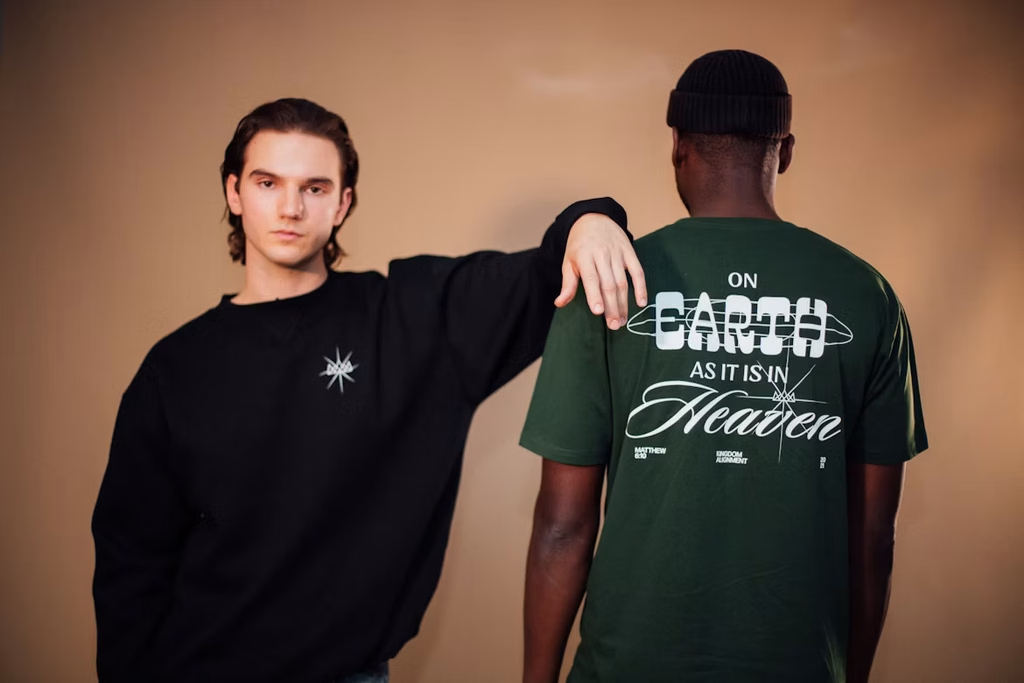
Oversized T-shirts have become especially popular in modern streetwear, but they create another layer of confusion.
Suppose you normally wear a Large in regular-fit T-shirts.
That doesn’t automatically mean you should buy Large in every oversized T-shirt.
An oversized Large might be significantly wider and longer than a regular Large because the additional volume is part of the design.
This is where shoppers often make a mistake.
They see the word “oversized” and assume they should simply size down.
That’s not always correct.
Some brands design oversized T-shirts with a wider body but normal length.
Others increase both width and length.
Some use dropped shoulders.
Others use a boxier silhouette.
So instead of automatically sizing down, look at the actual measurements and product photos.
The goal isn’t to find the smallest size that technically fits you.
The goal is to find the size that creates the intended silhouette.
8. Why You Shouldn’t Trust Your “Usual Size” Too Much
Your usual size is useful as a starting point.
It shouldn’t be your final decision.
If you normally wear Medium, you can start by checking the Medium on a new brand’s size chart.
But don’t stop there.
Look at:
- The garment measurements
- The stated fit
- Product photos
- Model measurements
- Fabric composition
- Your preferred silhouette
This is especially important when shopping online because you can’t physically try the garment before purchasing.
A size chart can reduce uncertainty, but understanding the garment’s intended fit makes the information much more useful.
9. How to Choose the Right T-Shirt Size Online
Here’s a simple process you can follow.
Step 1: Find a T-Shirt You Already Like
Choose a T-shirt that fits you exactly how you want.
Not just one that “fits.”
One that you genuinely like wearing.
Step 2: Measure It
Lay it flat on a clean surface.
Measure:
- Chest width
- Shoulder width
- Body length
- Sleeve length
Don’t stretch the fabric while measuring.
Step 3: Check the New Brand’s Size Chart
Look at the actual measurements.
Don’t simply convert your usual size.
Step 4: Identify the Fit
Is it:
- Slim?
- Regular?
- Relaxed?
- Oversized?
This can dramatically change how the same measurements look on the body.
Step 5: Compare the Measurements
If your favorite T-shirt is 22 inches across the chest and the new brand’s Medium is 20 inches, don’t blindly order Medium because “Medium is your size.”
The measurements are telling you something more useful.
Step 6: Consider the Look You Want
Do you want:
A fitted look?
Stay closer to your body measurements.
A relaxed look?
Choose additional room.
An oversized streetwear silhouette?
Look for significantly more width and appropriate shoulder and length proportions.
The right size isn’t simply the one that fits.
It’s the one that produces the silhouette you actually want.
A Quick Example
Let’s say you normally wear a Medium.
You find two brands.
Brand A — Medium
Chest width: 20 inches
Length: 28 inches
Shoulder: 17.5 inches
Brand B — Medium
Chest width: 23 inches
Length: 29 inches
Shoulder: 19 inches
Both are Medium.
But they’re clearly not the same garment.
Brand A will likely create a more conventional or closer silhouette.
Brand B provides significantly more room and may feel more relaxed or oversized depending on the construction.
The size label stayed the same.
The garment changed.
That’s the important distinction.
What This Means for Buying T-Shirts Online
The biggest mistake shoppers make is treating clothing sizes like universal measurements.
They’re not.
A size label is a shortcut.
Measurements provide the actual information.
The next time you shop for a T-shirt, don’t immediately ask:
“Do I wear S, M, L, or XL?”
Ask:
“What measurements do I like, and what fit is this T-shirt designed to create?”
That small change in thinking can eliminate a lot of sizing frustration.
It can also reduce unnecessary returns and help you become much better at shopping online.

Final Thought: Don’t Chase a Size. Find Your Fit.
There is no universal “perfect size.”
There is only the right relationship between your body, the garment’s measurements, and the silhouette you want.
That’s why a Medium from one brand can feel completely different from a Medium somewhere else.
Different brands use different patterns.
Different brands have different fit philosophies.
Different fabrics behave differently.
And every person has different proportions and preferences.
So don’t get too attached to the letter on the tag.
A Medium isn’t a personality trait.
It isn’t a measurement.
And it certainly isn’t a guarantee that the T-shirt will fit you.
The label tells you the category.
The measurements tell you the garment.
The fit tells you whether it’s right.
Once you start shopping that way, finding the right T-shirt becomes much less about guessing — and much more about knowing what you’re looking for.